Written by: Allyson N. Klassen (she/her), B.A., Kylie N. Viala (she/her), B.A., & Rebecca J. Cobb (she/her), PhD
Edited by: Nadra Musse (she/her)
*An acronym and definition key is found below this piece
When Anna asked for STI testing, her doctor questioned why she needed it, as they knew Anna was married. However, what Anna’s doctor didn’t know is that Anna and her husband are polyamorous, and she has two other sexual partners. Anna’s relationship is ethically non-monogamous (ENM*), which includes any relationships where partners consent to having more than one romantic or sexual partner at a time (1).
When the doctor questioned Anna’s request, it made Anna reluctant to disclose her ENM relationship status because of fear of their reaction. The problem is that hiding her relationships might compromise her health care. To avoid this situation,
providers must understand the diversity of romantic and sexual relationships, especially minority statuses such as ENM, to provide accurate and patient-centered care (2).
Ethically Non-Monogamous Relationships: Types and Prevalence
In Western contexts, most people idealize, privilege, and assume monogamy (mononormativity) (3). However, many people have multiple ongoing romantic and sexual relationships that are ethical and with the consent of all partners. ENM relationships are diverse, but some types are more common than others:
- Polyamory – Emotionally or physically intimate connections with more than one person (4).
- Open relationships – Sexual but typically not romantic connections with others outside the dyadic relationship (5).
- Swinging – Sexual partner swapping, usually with limited emotional or romantic connection (5).
People may also engage in variations on these types, such as polyamorous partners who are also swingers or go to sex clubs, or mono-poly, where individuals have one sexual/romantic partner who has other partners. There is also intersectionality within ENM, as many individuals are a part of the LGBTQIA2S+ community, suggesting there is no specific way to be ENM (5).
ENM relationships are not uncommon; in a nationally representative Canadian sample, 4% of people in relationships were ENM, which is comparable to the number of LGBTQIA2S+ Canadians (5,6).
US census data indicates that about 20% of individuals will engage in an ENM relationship at some point, which means that healthcare providers will treat ENM patients, whether they know it or not (7). Thus, providers need to understand relationship diversity and how this relates to patients’ sexual health.
Misconceptions and Stigma
Despite rising awareness of ENM, there are many misconceptions, such as individuals being portrayed as hypersexual, unhappy, and highly jealous, and those in ENM relationships are often dehumanized (3,7,8,12). However, the research does not support these negative perceptions; people who engage in ENM are just as, if not more, personally happy and satisfied in their relationships, and less jealous than those in monogamous relationships (10,11). Furthermore, ENM relationships provide unique benefits such as personal growth and authenticity (1,9). ENM relationships are fulfilling for those who choose them.
Despite these positive features of ENM relationships, discrimination and stigma are common and as many as 62% of those in ENM relationships report feeling stigmatized (13). In our qualitative research with
over 30 individuals in ENM relationships, many described stigmatizing and discriminatory experiences, such as a lack of access to marriage rights, being treated poorly by health professionals, or fearing job loss.
Many ENM individuals experience minority stress because of stigma, which is the effect of societal, structural, and interpersonal stressors or stigma due to a marginalized or minority identity(13,14). Minority stress is linked to poor mental and physical health, and not surprisingly, people in ENM relationships experience more depression and anxiety than those in monogamous relationships (3,14).
To avoid negative consequences, individuals in ENM relationships may conceal their relationships and “pass” for monogamous. If ENM individuals worry about prejudice from their family doctor, they may only reveal one romantic/sexual partner or hide the open nature of their relationship, much as Anna did (12).
Almost 40% of ENM participants report sometimes or always hiding their relationships or identity when accessing sexual health services,
especially when others are perceived as judgmental (13,15). Additionally, ENM patients may lie to healthcare providers about why they need STI tests to avoid judgment or being denied services (16).I f ENM patients do not feel safe to disclose, they are at higher risk of poor patient care or medical mistreatment.
How Can You Improve Patient Care for People in ENM Relationships?
1. Signal Safety to ENM Patients
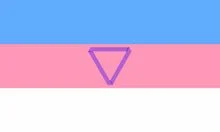
Recognize the diversity of relationships and create spaces that are ENM-affirming. A first step could be displaying an ENM or polyamory flag or symbol in your office, on your website, or stating your aim to serve patients of all relationship types in your mission statement or website materials.


2. Check Your Assumptions About ENM
Knowing that ENM relationships are unique may guide health providers’ thoughts and questions. For example, if a patient like Anna comes for STI testing, don’t assume that they are heterosexual or monogamous. Some questions to avoid assumptions could be, “Tell me about your romantic and sexual partners,” or “Some people are in relationships that are monogamous, and others are in relationships that are ethically non-monogamous, how do you describe yours?”
If your patients disclose their ENM relationships, don’t assume that they are sexually active with all partners. Ask, “Are you sexually active with each partner?” or for patients with a uterus ask, “Is there a chance of pregnancy in these relationships?”
3. Use Inclusive Language
Ensure you use inclusive language and avoid heteronormative words (e.g., boyfriend, wife, couple, and marriage) to create safety. Instead of asking if an individual is married or single,
ask open-ended questions about patients’ relationship type and make simple changes to your procedures, such as allowing for more than one emergency medical contact.
Using inclusive language and asking patients to share information without assuming monogamy can increase their comfort accessing services and the likelihood of disclosure, allowing healthcare professionals to provide better care (20).
4. Have a Non-Judgmental Attitude
Be non-judgmental and respectful of patients’ autonomy, especially regarding their relationship(s). ENM is a desired, healthy, and fulfilling arrangement for many people (10,11). Recognizing the validity and viability of ENM relationships and creating healthcare spaces and patient relationships to affirm the needs of ENM individuals will reduce stigma and result in true patient-centered care. This will meet patients’ needs and ultimately improve their physical and psychological well-being and ensure that all patients have fair access to services.
*Consensual non-monogamy (CNM) is another term for ENM relationships that is common in academic literature, but we use ENM as it is more commonly used by folks in these relationships (21).
References:
1. Moors AC, Matsick JL, Schechinger HA. Unique and shared relationship benefits of consensually non-monogamous and monogamous relationships: a review and insights for moving forward. Eur Psychol. 2017 Mar;22(1):55–71. Doi:10.1027/1016-9040/a000278
2. Doktorchik C, Manalili K, Jolley R, Gibbons E, Lu M, Quan H, Santana MJ. Identifying Canadian patient-centred care measurement practices and quality indicators: a survey. CMAJ Open. 2018 Dec;6(4):E643–50. Doi:10.9778/cmajo.20170143
3. Mahar EA, Irving LH, Derovanesian A, Masterson A, Webster GD. Stigma toward consensual non-monogamy: thematic analysis and minority stress. Pers Soc Psychol Bull. 2024 Apr;50(4):571–86. Doi:10.1177/01461672221139086
4. Graham N. Polyamory: A call for increased mental health professional awareness. Arch of Sex Beh. 2014 Aug;(6):1031–4. Doi:10.1007/s10508-014-0321-3
5. Fairbrother N, Hart TA, Fairbrother M. Open relationship prevalence, characteristics, and correlates in a nationally representative sample of Canadian adults. JSR. 2019 Jul;56(6):695–704. Doi:10.1080/00224499.2019.1580667
6. Statistics Canada. LGBTQIA+ people. 2022 Dec. https://www150.statcan.gc.ca/n1/pub/12-581-x/2022001/sec6-eng.htm
7. Haupert ML, Gesselman AN, Moors AC, Fisher HE, Garcia JR. Prevalence of experiences with consensual nonmonogamous relationships: findings from two national samples of single Americans. JSMT. 2017 Jul;43(5):424–40. Doi:10.1080/0092623X.2016.1178675
8. Moors AC. Five misconceptions about consensually nonmonogamous relationships. current directions in psychological science : A Jour of the Amer Psychol Socie. 2023 Oct;32(5):355–61. Doi:10.1177/09637214231166853
9. Wood J, De Santis C, Desmarais S, Milhausen R. Motivations for engaging in consensually non-monogamous relationships. Arch of Sex Beh. 2021 May;50(4):1253–72. Doi:10.1007/s10508-020-01873-x
10. Cox DW, Fleckenstein JR, Sims-Cox LR. Comparing the self-reported health, happiness, and marital happiness of a multinational sample of consensually non-monogamous adults with those of the U.S. general population: additional comparisons by gender, number of sexual partners, frequency of sex, and marital status. Arch of Sex Beh. 2021 May;50(4):1287–309. Doi:10.1007/s10508-021-01973-2
11. Valentova JV, de Moraes AC, Varella MAC. Gender, sexual orientation and type of relationship influence individual differences in jealousy: a large Brazilian sample. Person and Indiv Differ. 2020 Apr;157:109805. Doi:10.1016/j.paid.2019.109805
12. Stults CB, Abreu RL, Tjia L, Kaczetow W, Brandt SA, Malavé DM, et al. Enacted and anticipated stigma related to consensual nonmonogamy among LGBTQ+ adults. Psychol of Sex Orien and Gend Divers. 2023 Sept;10(3):461–72. Doi:10.1037/sgd0000546
13. Valadez AM, Rohde J, Tessler J, Beals K. Perceived stigmatization and disclosure among individuals in consensually nonmonogamous relationships. Analys of Social Issu and Publi Policy. 2020 Dec;20(1):143–65. Doi:10.1111/asap.12194
14. Borgogna NC, Aita SL, Aita LJ. Minority stress in consensually non-monogamous individuals: mental health implications. Sexu and Relati Thera. 2024 Jan;39(1):46–65. Doi:10.1080/14681994.2021.1959545
15. Campbell C, Scoats R, Wignall L. “Oh! how modern! and… are you ok with that?”: consensually non-monogamous people’s experiences when accessing sexual health care. JSR. 2024;61(9):1377–88. Doi:10.1080/00224499.2023.2246464
16. Scoats R, Campbell C. ‘It made me feel judged’: why it is harder to get sexual healthcare if you practice consensual non-monogamy. Medica Xpress. 2024 Jun. https://medicalxpress.com/news/2024-06-harder-sexual-health-consensual-monogamy.html
17. LGBTQIA+ Wiki. Ethical non-monogamy. LGBTQIA+ Wiki. 2025. https://lgbtqia.wiki/wiki/Ethical_Non-Monogamy
18. Howell R. Tricolor polyamory pride flag. Polyamproud. 2022. https://www.polyamproud.com/flag
19. LGBTQIA+ Wiki. Polyamorous. LGBTQIA+ Wiki. https://lgbtqia.wiki/wiki/Polyamorous
20. Scoats R, Campbell C. Understanding service preferences among consensually non-monogamous individuals seeking sexual healthcare. Cultu, Healt & Sexuali. 2025;27(1):32–45. Doi:10.1080/13691058.2024.2350434
21. CNM vs ENM: differences explained. ENM Living. 2023. https://enmliving.com/cnm-vs-enm/